

Artificial intelligence in education is changing how we approach learning. With advanced tools, students engage smarter and teachers become more efficient. The classroom experience is evolving, promising tailored learning pathways.
AI-driven solutions offer personalised instruction, helping each student thrive. Moreover, educators can focus on cultivating critical thinking skills rather than routine tasks. This shift enhances collaboration and understanding amongst learners.
Excited to see how AI can redefine education? Keep reading to discover innovative ways it is making a difference!
The Role of Artificial Intelligence in Modern Classrooms
Artificial Intelligence in Education is changing the way teachers and students interact in modern classrooms. With AI, learning becomes more engaging and tailored to each student’s needs. Teachers can use smart tools to track student progress and adjust lessons accordingly, helping every learner succeed.
AI tools also provide instant feedback to students, making it easier for them to understand their mistakes. This real-time support keeps learners motivated and encourages them to ask questions.
When students feel confident, they are more likely to participate and enjoy their education through Artificial Intelligence in Education.
Moreover, AI can assist teachers in managing their classrooms better. By automating routine tasks, teachers have more time to focus on teaching and connecting with their students.
This support enhances the educational experience and fosters a positive learning environment for everyone, proving the value of Artificial Intelligence in Education.
Benefits of AI for Students and Educators
AI offers many benefits for both students and educators. For students, it provides personalised learning experiences that fit their unique needs. With smart tools, they can learn at their own pace and receive help in areas where they struggle. This support boosts their confidence and helps them enjoy learning more.
For educators, AI saves time by automating administrative tasks. Teachers can spend less time on paperwork and more time helping students. AI can also provide data and insights on student performance, allowing teachers to identify who needs extra support and adjust their lessons effectively.
Moreover, AI fosters collaboration between students and teachers. With easy communication tools, students can ask questions and receive instant feedback. This interaction makes learning more dynamic and inclusive, encouraging students to participate actively in their education.
Key AI Tools for Education
There are many key AI tools that help transform education for students and teachers. One popular tool is intelligent tutoring systems, which provide personalized lessons and instant feedback to students. These systems adapt to each student’s learning style, making it easier for them to understand tricky subjects.
Another useful AI tool is speech recognition software. It allows students to practice their speaking skills and receive feedback on their pronunciation. This tool can benefit learners of different languages and those who may have difficulties with traditional writing.
Additionally, learning management systems (LMS) use AI to track student progress in real-time. Teachers can easily see which topics students are struggling with. This insight helps them to adjust their lessons and offer support where it’s needed the most, leading to better educational outcomes.
Challenges of Implementing AI in Schools
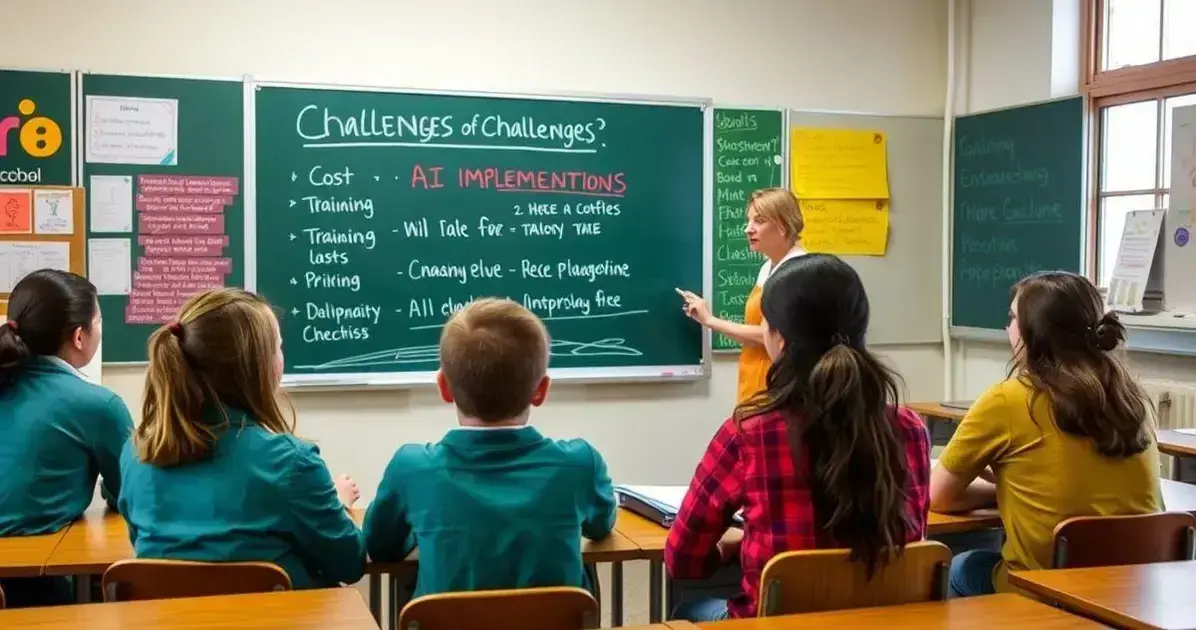
Implementing AI in schools comes with several challenges that educators must face. One major issue is cost. Many schools may lack the budget to invest in the latest AI technologies. Without proper funding, it can be difficult to provide all students with access to these effective learning tools.
Another challenge is training staff to use AI effectively. Teachers need to understand how to incorporate AI tools into their lessons. Without adequate training, they may feel overwhelmed and unsure of how to use these technologies to enhance student learning.
Finally, data privacy is a significant concern when using AI in education. Schools must protect students’ personal information while still using data to improve learning experiences. Balancing these needs can be tough, but it is essential for creating a safe learning environment.
Future Trends of AI in Education
The future of AI in education looks promising, with new trends shaping how students learn. One exciting development is the rise of adaptive learning platforms. These platforms can adjust lessons based on each student’s strengths and weaknesses, ensuring a personalised approach that maximises learning outcomes.
Another trend is the integration of virtual reality (VR) and augmented reality (AR) in classrooms. These technologies can provide immersive learning experiences, allowing students to explore complex subjects in a hands-on way. Imagine studying history by walking through ancient civilisations or biology by exploring the human body in 3D.
Finally, data analytics will continue to play a vital role in education. By analysing student performance data, teachers can gain insights into learning trends and adjust their teaching strategies. This data-driven approach will help ensure that every student gets the support they need to thrive.
Real-World Examples of AI Enhancing Learning
Many schools worldwide are using AI to enhance learning and make education more effective. For example, a school in California has adopted automated grading systems. These systems help teachers quickly assess student work, freeing up time for lessons and personal interactions. Students receive faster feedback, which helps them understand their mistakes and improve their skills.
In another case, an online learning platform uses AI-driven recommendations to suggest study materials to students based on their performance. This approach personalises the learning experience for each student, ensuring they focus on areas where they need the most support. As a result, learners are more engaged and motivated to succeed.
Additionally, some universities have implemented chatbots to assist students with questions about their courses. These chatbots provide instant answers and support 24/7. This access helps students feel more connected to their educational resources and encourages them to seek help whenever they need it.
FAQ – Artificial Intelligence in Education
How is Artificial Intelligence in Education changing classrooms?
AI is transforming classrooms by offering personalised learning, instant feedback, and tools that help teachers track student progress more effectively.
What are the main benefits of AI for students?
Students benefit from customised lessons, real-time support, and engaging learning experiences that adapt to their individual needs.
How does AI help teachers?
AI saves teachers time by automating administrative tasks and providing insights into student performance, allowing them to focus more on teaching and student support.
What challenges do schools face when implementing AI?
Key challenges include the cost of new technologies, the need for teacher training, and concerns over data privacy for students.
What are some future trends of AI in education?
Trends include adaptive learning platforms, virtual and augmented reality in classrooms, and advanced data analytics to support personalised education.
Are there real-world examples of AI improving learning?
Yes. Examples include AI-driven grading systems, personalised study recommendations on online platforms, and chatbots that support students with course-related questions.
Don’t miss our article on Renewable Energy and discover how sustainable power sources are shaping the future, reducing environmental impact, and creating smarter, cleaner solutions for everyday life.